
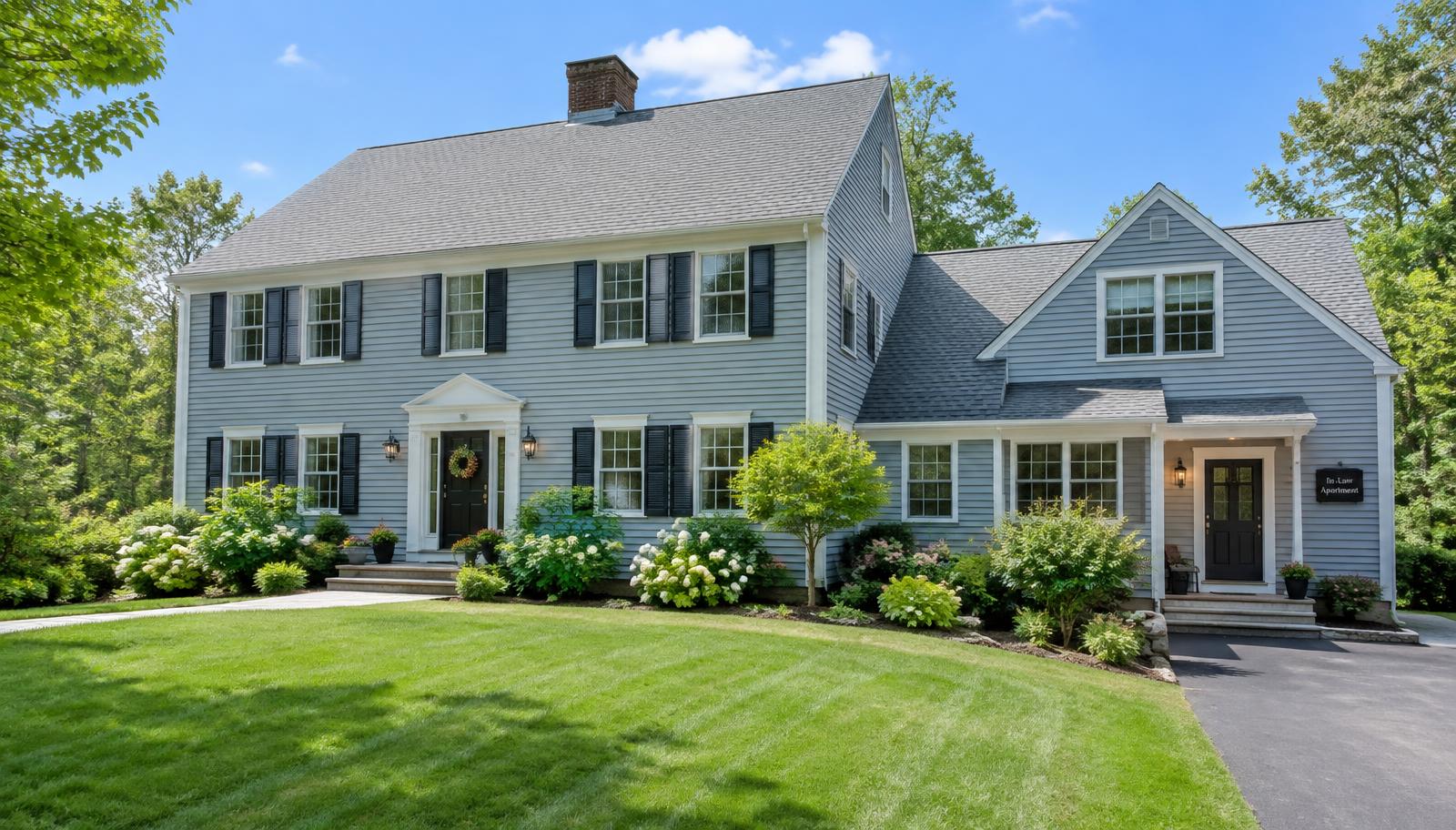
In-Law Apartments & Multi-Generational Homes in Rhode Island
One house, two households, and a lot more breathing room financially. Here is why Rhode Island families are buying homes with in-law apartments — and exactly what to check before you do.
Call or Text Cheryl now
Moving a parent in, or moving in with family? Cheryl will help you plan it properly.
Why multi-generational living works
Rhode Island has always been a state where families stay close. What has changed is the math. Home prices and childcare and eldercare costs have all climbed faster than wages, and one of the few strategies that beats all three at once is two generations sharing a roof — with real walls between them.
Done right, nobody gives up independence. Parents keep their own kitchen and their own front door. The younger household gets into a better house and a better school district than they could otherwise afford. Grandchildren grow up around grandparents. And when circumstances change, the space adapts.
Two households, one mortgage
Splitting a mortgage, taxes, heat and insurance across two generations puts a far better house within reach than either household could carry alone — and it is the single biggest reason RI families buy this way.
Childcare down the hall
Full-time daycare in Rhode Island can run over a thousand dollars a month per child. Grandparents in the next unit change that math completely, and the kids grow up knowing them.
Eldercare without a facility
Assisted living is expensive and rarely what a parent wants. An in-law apartment keeps Mom or Dad independent, nearby, and safe — with their own kitchen, their own door, and their own routine.
Privacy, not a spare bedroom
A true in-law unit has its own entrance, kitchen and bath. That separation is what makes multi-generational living last for years instead of straining relationships by month three.
Built-in flexibility
When it is no longer needed for family, many in-law units can become a rental or return to primary living space. Few home features hold value across so many life stages.
Strong resale in Northern RI
Legal in-law and accessory dwelling units are genuinely scarce in Burrillville, Glocester, Smithfield, Cumberland and Lincoln. Scarce features sell — often to the next multi-generational family.
What to check before you buy
An in-law apartment is only an asset if it is legal, functional and financeable. These are the six things Cheryl verifies on every multi-generational purchase.
Is it legal, or just built?
Plenty of Rhode Island homes have a basement or garage apartment that was never permitted. Cheryl checks the certificate of occupancy, permit history and town zoning file before you fall in love with it.
ADU rules changed in Rhode Island
State law has opened up accessory dwelling units considerably, but towns still apply their own standards for size, parking, setbacks and owner occupancy. What is allowed in Lincoln is not identical to Glocester.
Septic capacity and water
In rural Northern RI, a second kitchen and bath can push a septic system past its design. Bedroom count on the septic permit, not the listing, is what governs.
Utilities and metering
One meter or two, separate heat zones, and how bills get split should be settled before closing — it prevents the most common family friction later.
Who is on the deed and the loan
Joint ownership, life estate, or a single owner with a written family agreement all work differently for taxes, inheritance and Medicaid planning. Talk to an attorney early; Cheryl can recommend local ones.
Accessibility today and later
A first-floor unit, a step-free entry, and a 36-inch doorway cost nothing extra to look for now and matter enormously in ten years.
Get in-law apartment listings first
Homes with legal in-law units are rare in Northern and Central RI and go fast. Cheryl will email you the moment one hits the market in your towns.
In-law apartment questions, answered
Planning a move with family?
Tell Cheryl who is moving, roughly what the combined budget looks like, and which towns matter. She will build a search that includes in-law units, ADUs, two-families, and homes where an addition makes sense.